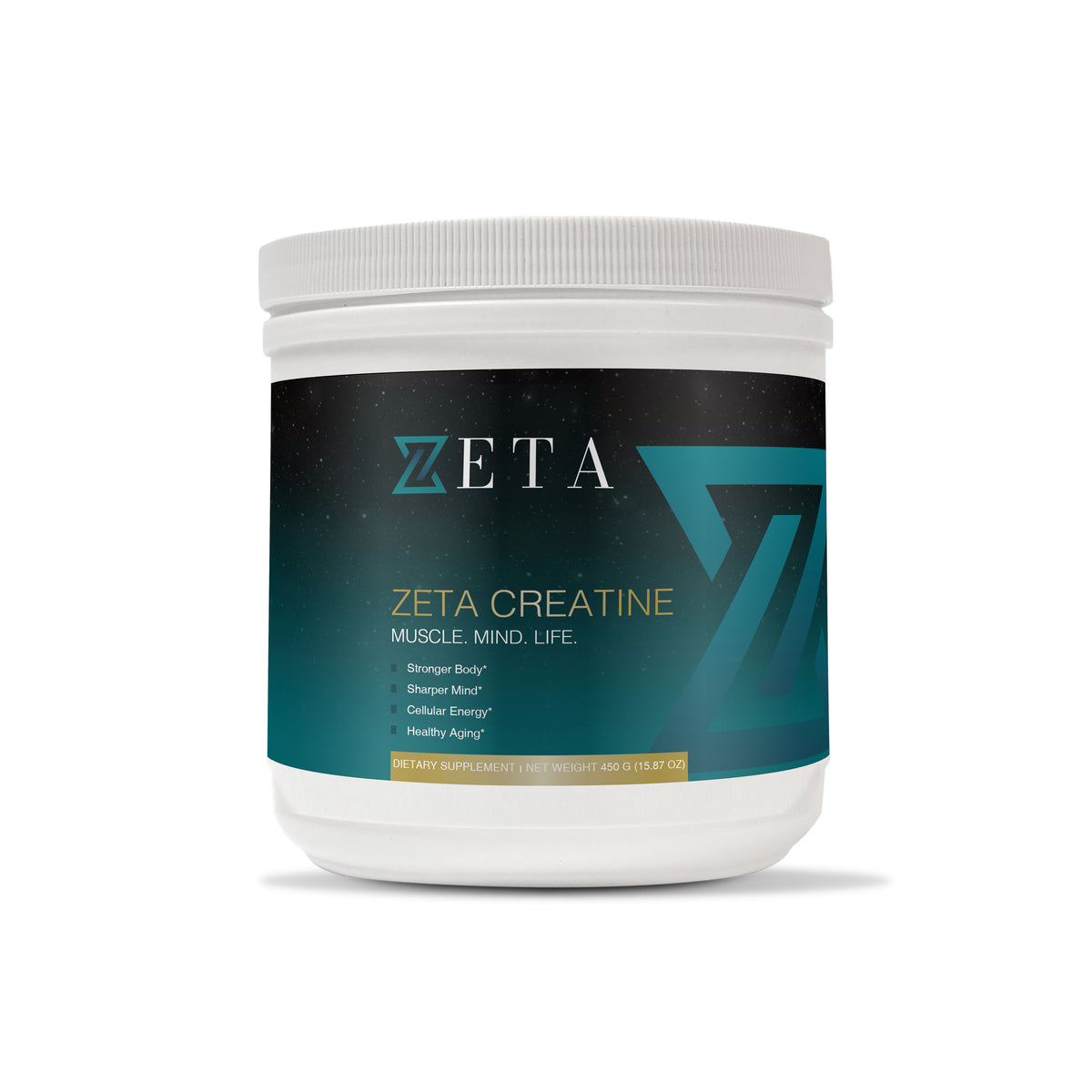
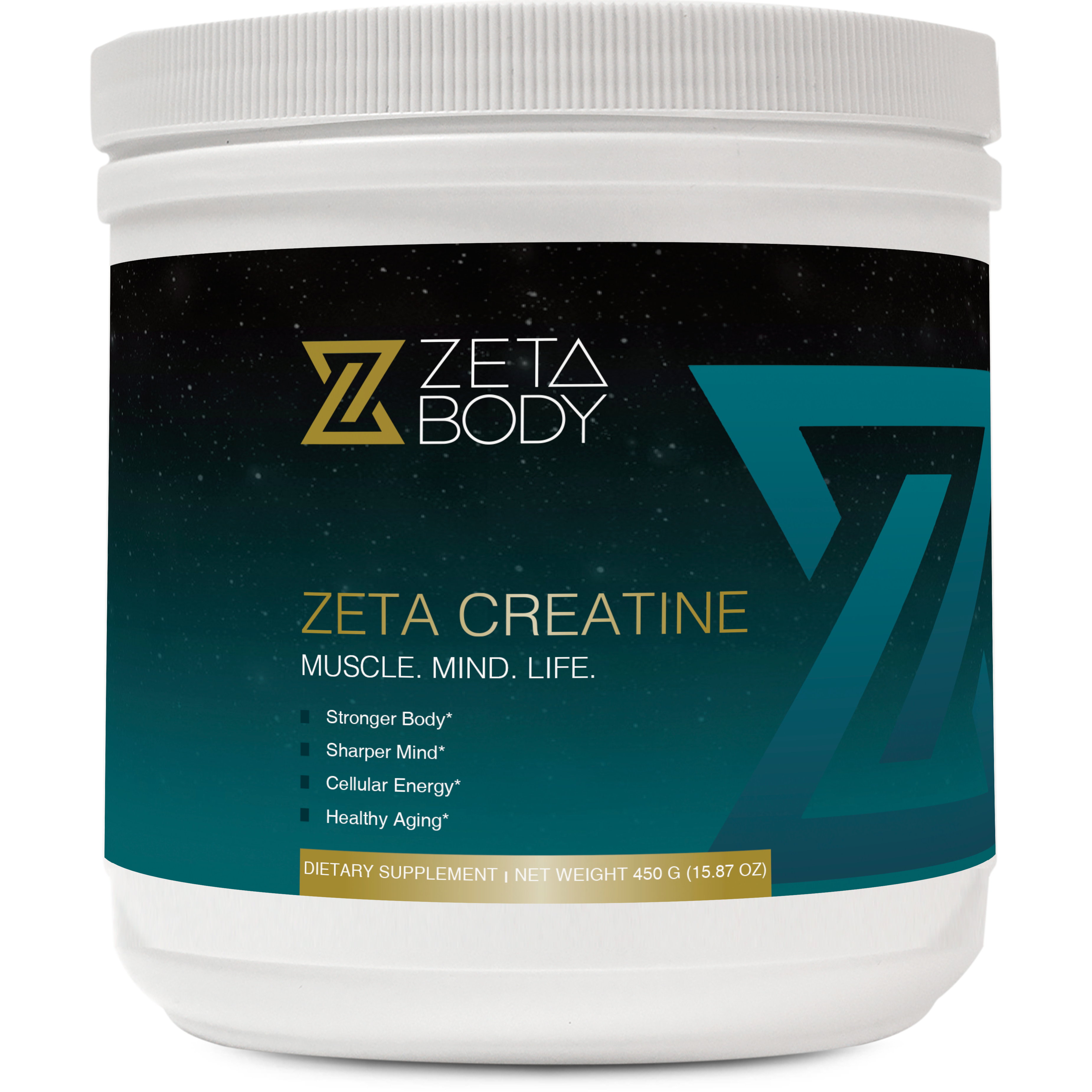
ZETA CREATINE
PURE CREATINE MONOHYDRATE COMPLEXDescription
Clinical Applications
- Stronger Body*
- Sharper Mind*
- Cellular Energy*
- Healthy Aging*
For Muscle. Mind. Life. That’s the point. ZETA CREATINE helps support cellular energy for the body you train, the brain you rely on, and the life you’re building. It fuels muscle performance, strength, and lean muscle maintenance when combined with exercise, while also supporting cognitive function and brain energy. Built for athletes, busy brains, active aging, and everyday humans who want to stay stronger for longer.*
All ZETA BODY Formulas Meet or Exceed cGMP Quality Standards
Discussion
ZETA CREATINE features pure creatine monohydrate, an extensively studied supplemental form of creatine. This compound has a well-established vital role in cellular energy production, helping to fuel muscle health in people of all ages and athletic abilities. Creatine stores phosphate groups as phosphocreatine, which then donates the phosphate groups to adenosine diphosphate (ADP) to regenerate it to adenosine triphosphate (ATP), the primary cellular energy source. Approximately half of the creatine needed by the body is produced endogenously from the amino acids arginine, glycine, and methionine. Creatine can also be obtained through dietary sources, primarily meat and fish. Individuals who consume a predominantly plant-based diet have been suggested to have lower creatine accumulation and a greater response to creatine supplementation.*
Although 95% of creatine is stored in muscles, it is also found in heart, brain, kidney, retinal, and testicular tissues. Creatine levels can be impacted by diet, physical activity, and a natural decline that occurs with aging. The body metabolizes 1% to 2% of stored creatine daily into the waste product creatinine, which is excreted in the urine.* The primary benefit of creatine supplementation is to replenish cellular energy by raising phosphocreatine to accelerate the recycling of ADP to ATP, which is how it helps support muscle performance.* However, other tissues that store creatine may also benefit from enhanced cellular energy production. Individual responses to creatine supplementation can vary based on diet, body composition, and intensity of physical activity.*
Creatine Supplementation Approaches
Creatine loading refers to a supplementation strategy used to increase creatine stores in skeletal muscle and involves supplementing with an oral dosage of 20 to 25 g/d for 5 to 7 days.* Creatine loading doses are typically divided into 4 to 5 servings per day, a practice found to help mitigate gastrointestinal distress associated with doses over 10 g.* The loading phase is followed by a daily lower maintenance dose of 3 to 5 g.* A 1996 landmark study comparing creatine loading with an everyday maintenance dose found that creatine accumulation in muscle was similar when consumed as a dose of 3 g for 28 days or as 20 g for 6 days.* Dosage recommendations and whether to load for a short period or take a smaller dose for a longer period may depend on the goal of the individual,* but it has been established that both loading- and maintenance-dose strategies can increase creatine stores in skeletal muscle.*
Muscle Performance
A substantial body of research has established a role for supplemental creatine in fueling muscles and exercise performance in individuals from across diverse populations and with varying levels of physical activity. Creatine supports muscle performance by boosting ATP production to help muscles contract when anaerobic activity is initiated and helping to maintain a continuous energy supply to the muscle cells when exercising.*
Cognitive Function
The functional role of creatine in cellular energy metabolism, combined with its well-established role in muscle performance, has led to additional studies evaluating its potential to boost brain performance.* Studies have suggested that creatine supplementation may promote cognitive function in the aging population.* Overall, a link between creatine and cognitive function has been noted in the research; however, additional and more robust trials are needed to further validate the impact of creatine supplementation on enhanced cognitive function.*
Lean Muscle Mass
In addition to muscle performance and cognitive function, studies have also explored a role for supplemental creatine in promoting lean muscle mass. In the aging population, creatine has been demonstrated to improve the quality of life by increasing muscle strength and resistance to fatigue. It has also been demonstrated to increase lean body mass in both younger and older adults when combined with resistance training.*
This formulation is designed to provide a daily maintenance dose of creatine to fuel and replenish cellular energy production in tissues where creatine is stored. Widely used by both athletes and individuals concerned about age-related lean muscle loss, creatine supports muscle performance and may also support cognitive function.*
*These statements have not been evaluated by the Food and Drug Administration. This product is not intended to diagnose, treat, cure, or prevent any disease.
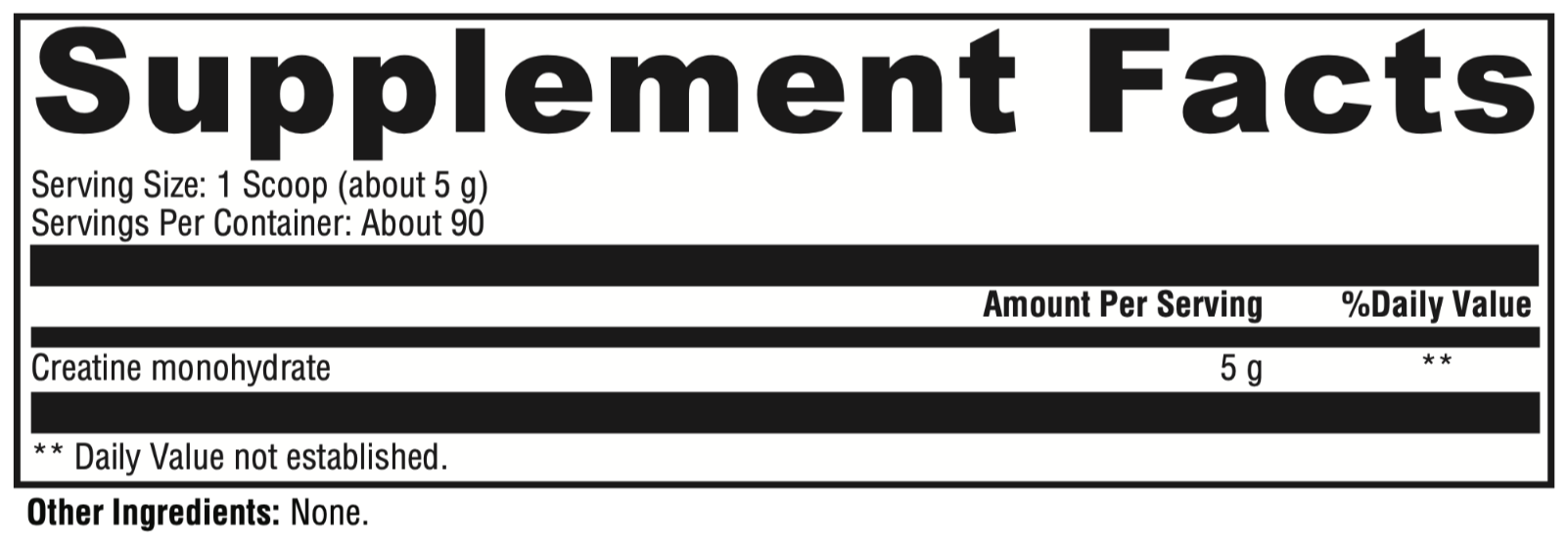
Ingredients
How to Use
Formulated To Exclude
Warning
Clinical Applications
- Stronger Body*
- Sharper Mind*
- Cellular Energy*
- Healthy Aging*
For Muscle. Mind. Life. That’s the point. ZETA CREATINE helps support cellular energy for the body you train, the brain you rely on, and the life you’re building. It fuels muscle performance, strength, and lean muscle maintenance when combined with exercise, while also supporting cognitive function and brain energy. Built for athletes, busy brains, active aging, and everyday humans who want to stay stronger for longer.*
All ZETA BODY Formulas Meet or Exceed cGMP Quality Standards
Discussion
ZETA CREATINE features pure creatine monohydrate, an extensively studied supplemental form of creatine. This compound has a well-established vital role in cellular energy production, helping to fuel muscle health in people of all ages and athletic abilities. Creatine stores phosphate groups as phosphocreatine, which then donates the phosphate groups to adenosine diphosphate (ADP) to regenerate it to adenosine triphosphate (ATP), the primary cellular energy source. Approximately half of the creatine needed by the body is produced endogenously from the amino acids arginine, glycine, and methionine. Creatine can also be obtained through dietary sources, primarily meat and fish. Individuals who consume a predominantly plant-based diet have been suggested to have lower creatine accumulation and a greater response to creatine supplementation.*
Although 95% of creatine is stored in muscles, it is also found in heart, brain, kidney, retinal, and testicular tissues. Creatine levels can be impacted by diet, physical activity, and a natural decline that occurs with aging. The body metabolizes 1% to 2% of stored creatine daily into the waste product creatinine, which is excreted in the urine.* The primary benefit of creatine supplementation is to replenish cellular energy by raising phosphocreatine to accelerate the recycling of ADP to ATP, which is how it helps support muscle performance.* However, other tissues that store creatine may also benefit from enhanced cellular energy production. Individual responses to creatine supplementation can vary based on diet, body composition, and intensity of physical activity.*
Creatine Supplementation Approaches
Creatine loading refers to a supplementation strategy used to increase creatine stores in skeletal muscle and involves supplementing with an oral dosage of 20 to 25 g/d for 5 to 7 days.* Creatine loading doses are typically divided into 4 to 5 servings per day, a practice found to help mitigate gastrointestinal distress associated with doses over 10 g.* The loading phase is followed by a daily lower maintenance dose of 3 to 5 g.* A 1996 landmark study comparing creatine loading with an everyday maintenance dose found that creatine accumulation in muscle was similar when consumed as a dose of 3 g for 28 days or as 20 g for 6 days.* Dosage recommendations and whether to load for a short period or take a smaller dose for a longer period may depend on the goal of the individual,* but it has been established that both loading- and maintenance-dose strategies can increase creatine stores in skeletal muscle.*
Muscle Performance
A substantial body of research has established a role for supplemental creatine in fueling muscles and exercise performance in individuals from across diverse populations and with varying levels of physical activity. Creatine supports muscle performance by boosting ATP production to help muscles contract when anaerobic activity is initiated and helping to maintain a continuous energy supply to the muscle cells when exercising.*
Cognitive Function
The functional role of creatine in cellular energy metabolism, combined with its well-established role in muscle performance, has led to additional studies evaluating its potential to boost brain performance.* Studies have suggested that creatine supplementation may promote cognitive function in the aging population.* Overall, a link between creatine and cognitive function has been noted in the research; however, additional and more robust trials are needed to further validate the impact of creatine supplementation on enhanced cognitive function.*
Lean Muscle Mass
In addition to muscle performance and cognitive function, studies have also explored a role for supplemental creatine in promoting lean muscle mass. In the aging population, creatine has been demonstrated to improve the quality of life by increasing muscle strength and resistance to fatigue. It has also been demonstrated to increase lean body mass in both younger and older adults when combined with resistance training.*
This formulation is designed to provide a daily maintenance dose of creatine to fuel and replenish cellular energy production in tissues where creatine is stored. Widely used by both athletes and individuals concerned about age-related lean muscle loss, creatine supports muscle performance and may also support cognitive function.*
*These statements have not been evaluated by the Food and Drug Administration. This product is not intended to diagnose, treat, cure, or prevent any disease.
This product is rated 5.0 of 5.0 stars.
It has received 2 reviews.
You may also like